

STEMxLearning • January 2, 2026

Technology is everywhere. That part is obvious.
Kids learn how to swipe a screen before they learn how to write their names properly. Online classes, games, apps, AI tools — all of it feels normal now. Almost boring, actually.
But the strange part is this: even though we’re surrounded by technology all the time, very few students are ever taught how it actually works.
In school, technology usually means typing assignments, making PPTs, or googling answers. We’re told how to use things, but not why they work the way they do. And definitely not how to build them ourselves.
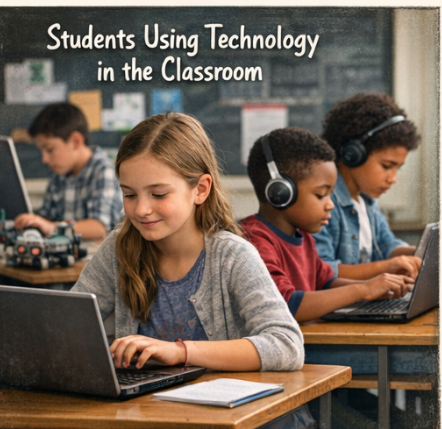
Students grow up surrounded by technology, but rarely taught how it actually works.
I don’t think schools do this on purpose. Most of the education system was created when technology was just an extra tool, not something shaping how we think, communicate, or make decisions every day. But the gap is becoming harder to ignore.
Most students today are great users of technology. They know which app does what, how to install updates, how to navigate new platforms quickly. That often gets labeled as being “tech-savvy.”
But using technology and understanding it are two very different things.
A lot of students have no idea how an app is made, why software crashes sometimes, or what actually happens after you click a button. It all feels like a black box. Things either work or they don’t — and when they don’t, frustration kicks in.
That’s how we slowly become passive users instead of confident creators.

Understanding technology is what turns passive users into confident creators.
Another thing schools rarely talk about is that technology isn’t really about screens. It’s about thinking.
Behind every app, website, or game, someone had to sit down and ask questions. What problem are we solving? What should happen first? What if something goes wrong? None of this has anything to do with tablets or smart boards. It’s about breaking things down, testing ideas, and fixing what doesn’t work.
Ironically, these thinking skills are useful in almost every part of life, but they’re rarely taught directly.
And then there’s the fear of mistakes.
In school, mistakes usually mean marks lost. You’re trained to avoid them. But in technology, mistakes are unavoidable. Code breaks. Designs fail. Systems behave in ways you didn’t expect.
The first time something doesn’t work, many students assume they’re “bad at tech.” Not because they are — but because they were never taught that failure is part of the process. In tech, mistakes aren’t embarrassing. They’re clues.
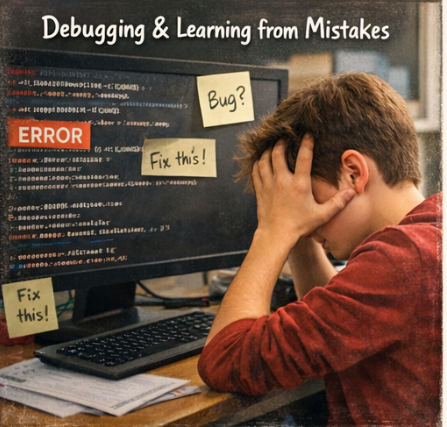
In technology, mistakes aren’t failures — they’re part of how real learning happens.
Another thing that gets overlooked is how human technology actually is.
Apps don’t just appear. AI doesn’t magically know things. Real people make choices — what to include, what to ignore, what to prioritize. Those choices matter. They affect behavior, opinions, and sometimes entire communities.
When students don’t learn this, it’s easy to assume technology is always correct or neutral. And that’s a risky assumption to grow up with.
There’s also this idea that technology is purely logical and technical. No creativity involved.
That couldn’t be further from the truth. Building a game, designing a website, or even creating a simple app requires imagination. You have to think about how someone else will feel while using it. What will confuse them? What will make them stay? That’s not just coding — that’s storytelling.
Schools often separate creative subjects and technical subjects, but technology lives somewhere in between.
A lot of parents worry that technology education only makes sense if a child wants to become an engineer. But honestly, that’s not the point.
Learning technology teaches you how to think clearly, plan better, adapt faster, and explain ideas properly. These skills don’t disappear just because you choose a different career. Almost every field today relies on digital systems in some way.
Another uncomfortable truth is that learning technology takes time. Social media makes it look fast and flashy — like mastery happens overnight. In reality, it doesn’t. Learning tech is slow, confusing, and sometimes boring.
Schools rarely prepare students for that kind of learning journey. But once you go through it, you build patience and confidence that stays with you.
And finally, there’s responsibility.
Technology shapes real lives. Algorithms decide what we see. AI influences decisions. That kind of power comes with consequences, but ethics is rarely part of the conversation in classrooms.
Students should be encouraged to ask uncomfortable questions. Should this be built? Who benefits? Who might be harmed? Understanding technology without thinking about its impact is dangerous.
Parents don’t need to be experts to help here. Just encouraging curiosity, asking kids to explain how something works, and valuing effort over perfect results can change a lot.
The goal isn’t to force children into a career path. It’s to help them understand the world they’re growing up in.
Schools do many things right. But when it comes to technology, understanding matters more than memorizing. Creation matters more than consumption.
In a world shaped by digital systems, knowing how technology works isn’t optional anymore. It’s a basic form of literacy.
And the earlier students start building it, the more confident — and thoughtful — they become.